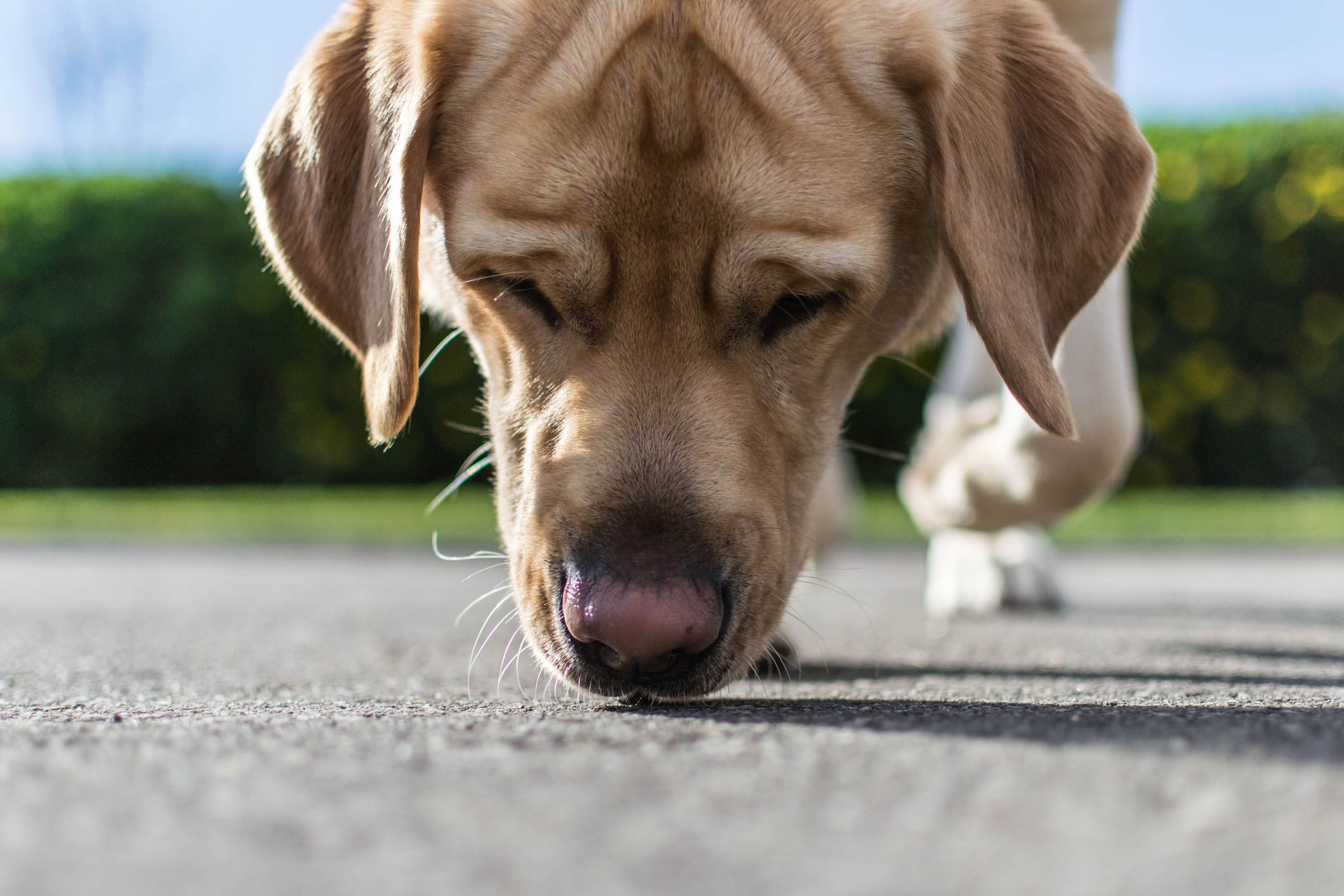
Dogs are not exactly known for their sense of personal space. From licking unfamiliar faces to sniffing intimate areas, their behaviour can sometimes leave people feeling awkward or embarrassed.
For many menstruating women, this lack of boundaries becomes particularly noticeable. Reports of dogs showing heightened interest during that time of the month are common, raising the question: why does this happen?
According to animal behaviour experts, the answer lies in a dog’s extraordinary sense of smell. “Dogs are scent-driven creatures,” said Kate Mornement, an Australian animal behaviourist and consultant.
“They experience their world predominantly through their sense of smell. When a woman is on her period she probably just smells different, which is interesting to the dog.”
Powerful Canine Sense Of Smell Explains Period Detection
Dogs possess an astonishing olfactory system, far superior to that of humans. With around 300 million scent receptors compared to our mere 5 million, their ability to detect subtle chemical changes is remarkable.
This sensitivity is why dogs are used in roles such as drug detection, forensic work and even identifying bed bugs. Research has also demonstrated their ability to detect certain health conditions, including cancer and migraines.
“When dogs sniff each other’s butts or when they’re sniffing a woman’s crotch while she’s on her period, it’s an information-seeking session,” explained Kirstin McMillan, a third-generation animal trainer based in Los Angeles. “When a woman is menstruating, I’m sure there are pheromones coming off.”
Pheromones And The Jacobson’s Organ Drive Interest
Biologically, dogs rely on a specialised sensory structure known as the vomeronasal organ, or Jacobson’s organ. This allows them to detect pheromones — chemical signals produced by the body.
In humans, these pheromones are secreted through apocrine glands, which are concentrated in areas such as the groin. This explains why dogs are naturally drawn to these regions when gathering information through scent.
The same behaviour is observed when dogs greet each other by sniffing genital and anal areas. It is simply part of how they interpret the world.
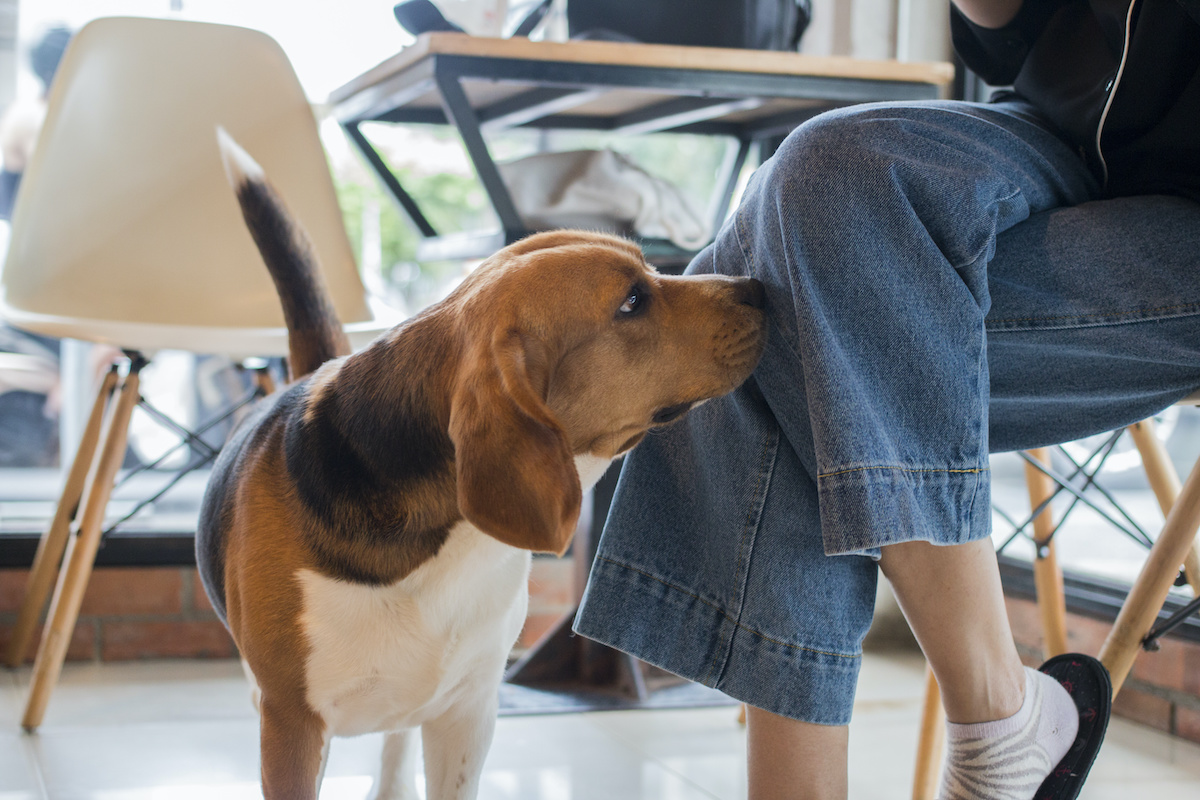
“A lot of times it’s about sex,” said McMillan. “They may be smelling for the presence of testosterone. Intact male dogs are often more aggressive and territorial, so they’re more likely to get really into it — because they’re trying to check for testosterone to determine the presence of some sort of challenge that needs to be posed or threat that they are under.”
She added that unneutered male dogs often assess reproductive status in other dogs, while females may also gather information about fertility and potential competition.
“Imagine a young woman in her childbearing years. In some ways, that poses a threat to another woman,” McMillan said. “As humans, we just pretend we don’t care, but dogs actually do. They’re not pretending.”
Why Some Dogs Are More Obvious Than Others
Not all dogs display this behaviour in the same way. Factors such as size, breed and training all play a role.
Mornement noted that medium to large dogs are more likely to be “opportunistic crotch-sniffers”, simply because their height puts them closer to the area in question. Smaller dogs may only attempt it when given the chance, such as when someone is seated.
Certain breeds, particularly scent hounds like bloodhounds and basset hounds, have an even stronger sense of smell and may show greater interest. However, training is often the deciding factor.
“Some dogs have been trained to do greetings more politely and have just done more greetings, so regardless of what they’re detecting, they’re going to seem like they don’t care,” McMillan said.
“But they can still smell that you’re on your period. They’ve just been conditioned to be indifferent. Other dogs are more obnoxious and just really shove their noses in the crotch and take a good inhale.”
For those dealing with overly enthusiastic pets, Mornement suggests redirecting their behaviour. “If your dog is a crotch sniffer and you’re embarrassed by it, teach them an incompatible behaviour, such as sitting calmly,” she said. “Use treats to reward your dog for sitting when other people are nearby.”
Why Dogs Are Attracted To Used Tampons — And The Risks
A related issue many dog owners encounter is their pet’s fascination with used tampons found in bins.
“I feel like all of us have a story about that, like when company came over, and Rex had his way with our tampons,” said McMillan. “They’ll be partying with your tampon, chewing it up piece by piece, and that really changes your relationship to your dog. It’s so gross. They’re very attracted to that scent, and it’s actually dangerous.”
If swallowed, tampons can cause serious internal blockages, which may be life-threatening. Immediate action is crucial.
YOU MAY ALSO LIKE: What Causes “Old Person Smell”? Scientists Link It To A Natural Ageing Skin Compound
“You may end up having to take them in because it might be something that doesn’t pass. Or if the tampon string is long enough, it can get entangled in the intestines,” McMillan explained.
To prevent such incidents, using bins with secure lids — or even lockable ones for particularly determined pets — is recommended.
Ultimately, this behaviour highlights the remarkable capabilities of a dog’s nose. “It might work against you in public settings when you have a bloodhound giving you a virtual pap smear,” McMillan said. “But when you are getting screened for cancer, you’re really appreciating that bloodhound and the accuracy of their nose.”

Why you can trust SurgeZirc UK. Learn more about our editorial standards.