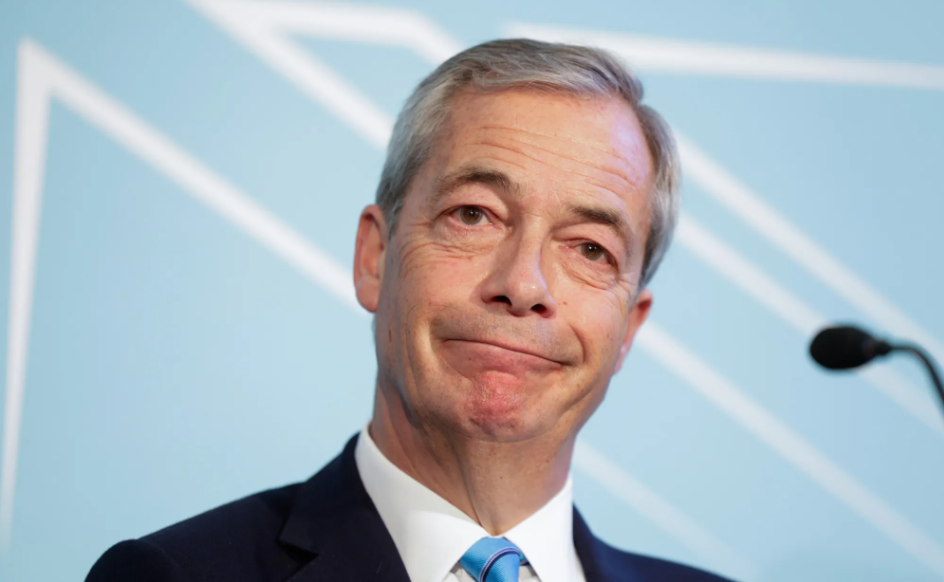
Nigel Farage has endured a turbulent stretch in recent days, with a series of political challenges placing the Reform UK leader under intense scrutiny.
The week began with the party reeling from a by-election defeat in Gorton and Denton, where the Greens secured victory over Reform. Soon afterward, the party found itself drawn into a heated debate over the United Kingdom’s potential involvement in Donald Trump’s military campaign against Iran.
Farage initially argued that Britain should actively support the operation, declaring: “The gloves need to come off, we need to accept that we are part of this with the Americans and the Israelis.” His stance was quickly echoed by senior figures within the party, including deputy leader Richard Tice and Greater Lincolnshire mayor Andrea Jenkyns.
Reform UK Divisions Emerge Over Britain’s Role In Iran Conflict
However, the position was not universally shared within Reform ranks. Robert Jenrick, a former Conservative who now serves as the party’s Treasury spokesperson, publicly suggested that Britain did not need to take part in the bombing campaign, highlighting divisions inside the party.
Just days later, Farage appeared to shift his stance. Speaking to reporters on Tuesday, he remarked: “If we can’t even defend Cyprus, let’s not get ourselves involved in another foreign war.”
The shift came as global oil prices surged, raising concerns about rising mortgage costs, petrol prices, and inflation in the UK. At the same time, polling indicated that 59% of the British public opposed joining the conflict.
During the same press briefing, Farage clashed with Sky News political editor Beth Rigby after she noted that Reform-run councils had not delivered on earlier pledges to reduce council tax.
He responded sharply: “Wrong, wrong, wrong, wrong, wrong! Never once in the county campaign, including here in Derbyshire, did I ever say we would cut council tax.”
Farage maintained that Reform’s “national literature” focused on reducing taxes overall rather than specifically lowering council tax rates.
Local Council Tax Decisions And Election Results Add To Pressure
The issue resurfaced later in the week when Farage struck a more frustrated tone regarding the party’s decision to take minority control of Worcestershire County Council. He admitted he wished the party “hadn’t bothered” taking control of the financially struggling authority.
Reform was forced to approve a council tax increase of nearly 9% in the area—one of the largest hikes in the county’s history—in order to balance the books.
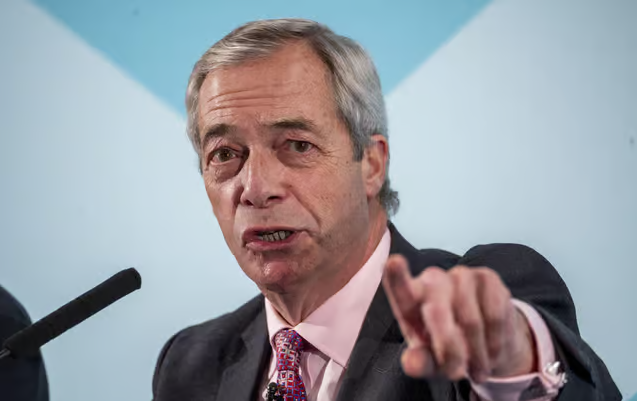
Adding to the party’s difficulties, Labour secured a council by-election victory in Durham County Council just days earlier, marking its first such gain in nearly a year.
Polling Disputes Spark Row Between Farage And Pollsters
Farage also took aim at polling companies during the week. He criticized YouGov after its surveys suggested weaker support for Reform compared with other pollsters, describing the company’s approach as “plainly deceptive” and calling for greater transparency around its modelling methods.
Despite his criticism, the latest YouGov poll placed Reform at 23%, still four percentage points ahead of the Conservative Party.
Luke Tryl, director of More In Common, defended the pollster. Writing on X, he said: “They’re a gold standard in our business, have a great track record and the rest of the industry learns so much from them. Sometimes pollsters get different results from each other, that’s a good thing [and] shows we aren’t herding!”
When asked about the week’s events, Reform dismissed suggestions that the party was under strain. Party sources highlighted national polling from More In Common that placed Reform at 30%.
They also pointed to three sold-out rallies during the week, each attended by thousands of supporters, and said the party had implemented what they described as the “lowest council tax rises in the country” with an average increase of 4.32%.
The party further claimed it had pushed YouGov to provide greater transparency regarding its methodology.
Analysts Question Nigel Farage’s Response To Rising Scrutiny
Still, some analysts have raised questions about Farage’s approach to criticism. Chris Hopkins, political director at Savanta, told HuffPost UK that the Reform leader appeared to be drawing from “the Trumpian playbook” by “reacting with hostility to scrutiny and blaming everyone but himself for his party’s fall in momentum in the opinion polls.”
He added: “This week he’s even turned his ire directly towards us pollsters where, not for the first time, he publicly challenges polling figures that he doesn’t seem to like.”
Current projections suggest Reform could win the largest number of seats in the next election, although the party is still predicted to fall short of an outright majority.
As a result, Farage is expected to remain under close examination as the next general election approaches.
Hopkins said: “The longer Reform stay at the forefront of British politics, the greater the scrutiny on Farage will be, and if his temperament is being questioned now, years away from a general election, it’ll be interesting to see how he’ll react to supporter expectation and the bright lights of an election campaign.”
YOU MAY ALSO LIKE: Kay Burley Says Keir Starmer Should Not Resign Over Peter Mandelson Scandal Despite Growing Pressure
He also noted a growing view that Reform’s surge in support may have reached its peak after more than a year of leading opinion polls. “The major challenge for Farage and his party will be to still be sitting atop of the pile when the music stops, especially when so much can change so quickly in British politics,” he said.
A Labour insider argued that the week had exposed weaknesses in Farage’s leadership. “Farage can’t deal with the pressure,” the source said. “The wheels have well and truly fallen off the bandwagon this week, the cracks are beginning to show.”
A source from the Green Party offered a similar perspective, saying: “Reform were able to play on easy mode, presenting themselves as outsiders to a failing Labour government but the mask has slipped.”
It took Farage years to secure a firm place in mainstream British politics, and for more than a year his party has maintained a strong lead in opinion polls by positioning itself as an alternative to traditional political parties.
SEE TODAY'S TOP HEADLINES ACROSS LEADING PUBLICATIONS
With the next general election still expected to be about three years away, attention will remain on whether the Reform leader can maintain that momentum and keep his party unified under mounting political pressure.

Why you can trust SurgeZirc UK. Learn more about our editorial standards.