England’s national team players have privately raised concerns about being expected to comment on political matters during the 2026 World Cup in the United States.
With around 100 days remaining before the tournament begins, discussions have taken place between members of the England squad and the Professional Footballers’ Association (PFA) about how to respond to growing calls for players to take public positions on global issues.
Human rights organisations have highlighted concerns connected to the host nation, including immigration policies, travel bans introduced by Donald Trump, policing practices, discrimination concerns and military activity involving Iran and Venezuela.
YOU MAY ALSO LIKE: Pentagon Identifies Six US Soldiers Killed In Iran Conflict After Kuwait Base Drone Strike
Players, including England captain Harry Kane, have spoken with the PFA about how they should approach questions from journalists and campaign groups urging them to speak out.
According to Sky News, PFA chief Maheta Molango said, “We’re talking about people who are smart, who are socially conscious, people who understand that they don’t live in a bubble, people will really understand that they have a platform, that platform can be used to create a better world and to try to influence people.
“However, what some of them have told me is that they found it a little bit unfair that ultimately, for as much as they have a platform, why should they turn into spokespeople for governments or for governing bodies that in reality should be the ones taking the lead?”
England Squad Wary Of Being Turned Into Political Spokespeople
Molango said some players believe the responsibility to address political issues should lie primarily with governments and governing bodies rather than footballers.
He said previous tournaments had left players feeling exposed when political debates became part of the football narrative.
“I think some of them felt that in the past, and we’ve seen that, for example, in Qatar, some of them basically were hung out to dry,” Molango said.
“Because instead of having the government or having the governing body showing leadership on certain topics, all of a sudden the players were asked to become political spokespeople and that’s not what they are. Those people are paid for delivering a show on the pitch.”
Memories Of Qatar World Cup Activism Still Fresh
The debate around activism is not new for England’s players. In the lead-up to the 2022 World Cup in Qatar, discussions about human rights and social issues became a major talking point.
The Football Association had planned for Harry Kane to wear a rainbow armband supporting LGBTQ+ rights, but the idea was abandoned after FIFA warned of possible disciplinary action.
Concerns about the treatment of migrant workers were also raised by the FA during that period. Former England manager Gareth Southgate regularly addressed political matters publicly, while current head coach Thomas Tuchel has been less inclined to do so.
Germany’s national team also staged a protest during the tournament. However, captain Joshua Kimmich later admitted the team regretted expressing “ourselves in a very political way” after their group-stage elimination.
Players Want Control Over When They Speak Out
Molango said many players remain aware of global issues but prefer to decide themselves if and when they comment publicly. “They are talking about all these issues, but behind the scenes, they don’t just necessarily want to talk about them in public,” he said.
“It is for them to use their platform when they deem it appropriate. Most of them have a view.
They’re very conscious of what’s going on, they want to make a difference, but it needs to be on their own terms. It cannot be that they are forced to become political spokespeople because that’s not their job.”
Debate Continues Over Role Of Footballers In Global Issues
The PFA has also pointed out that players have no influence over where the World Cup is hosted, as that decision is made by FIFA’s congress involving national football associations.
Molango argued that this means players should not be criticised if they remain silent on political issues linked to host countries.
“When a player does not speak, it’s not that he or she does not care,” he said. “Give the players a voice [on FIFA decisions], and they’ll be able to be held accountable, but you cannot just cherry-pick when it suits you to let the players have a choice. I think that’s unfair.”
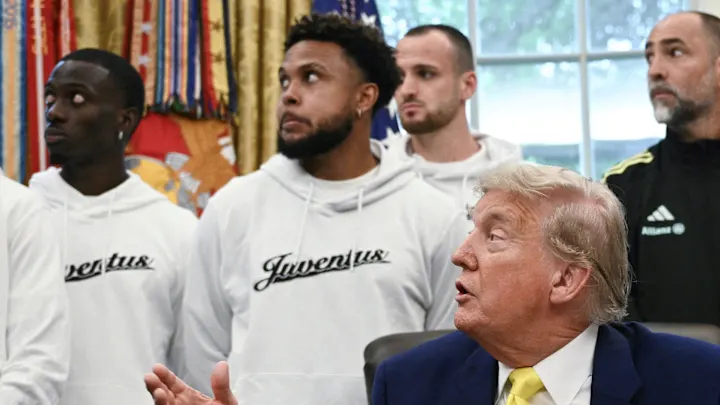
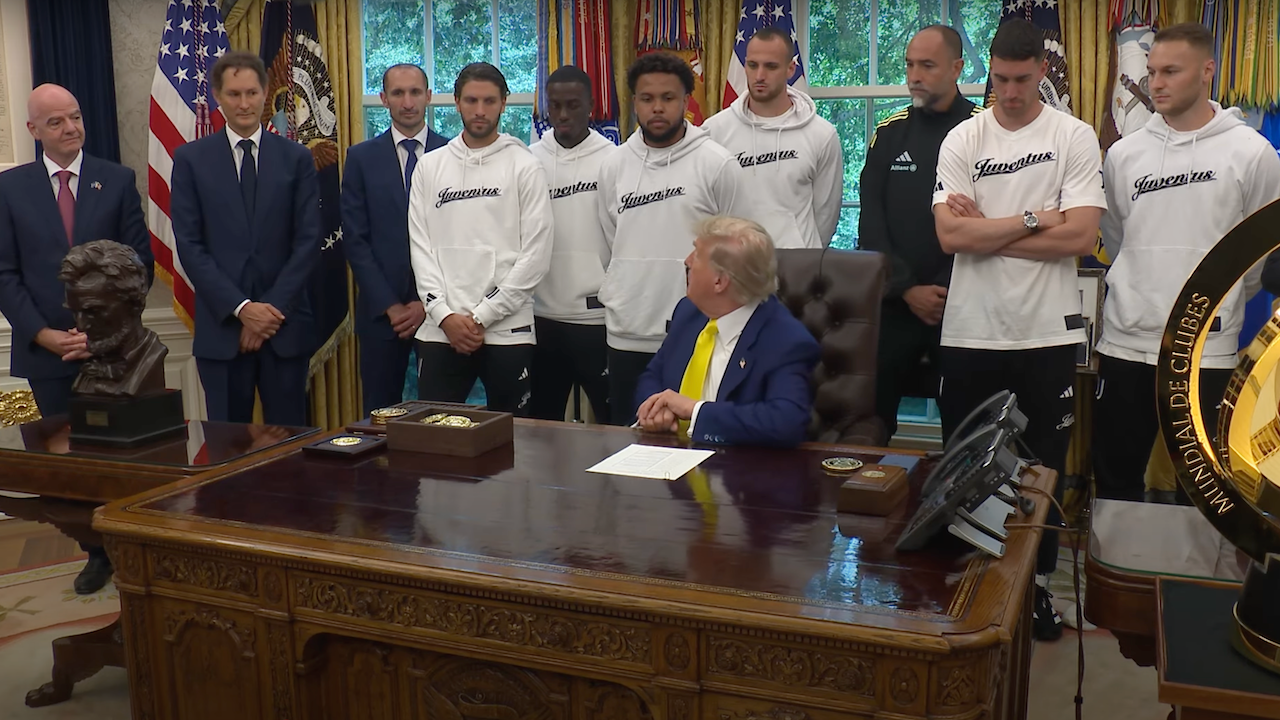
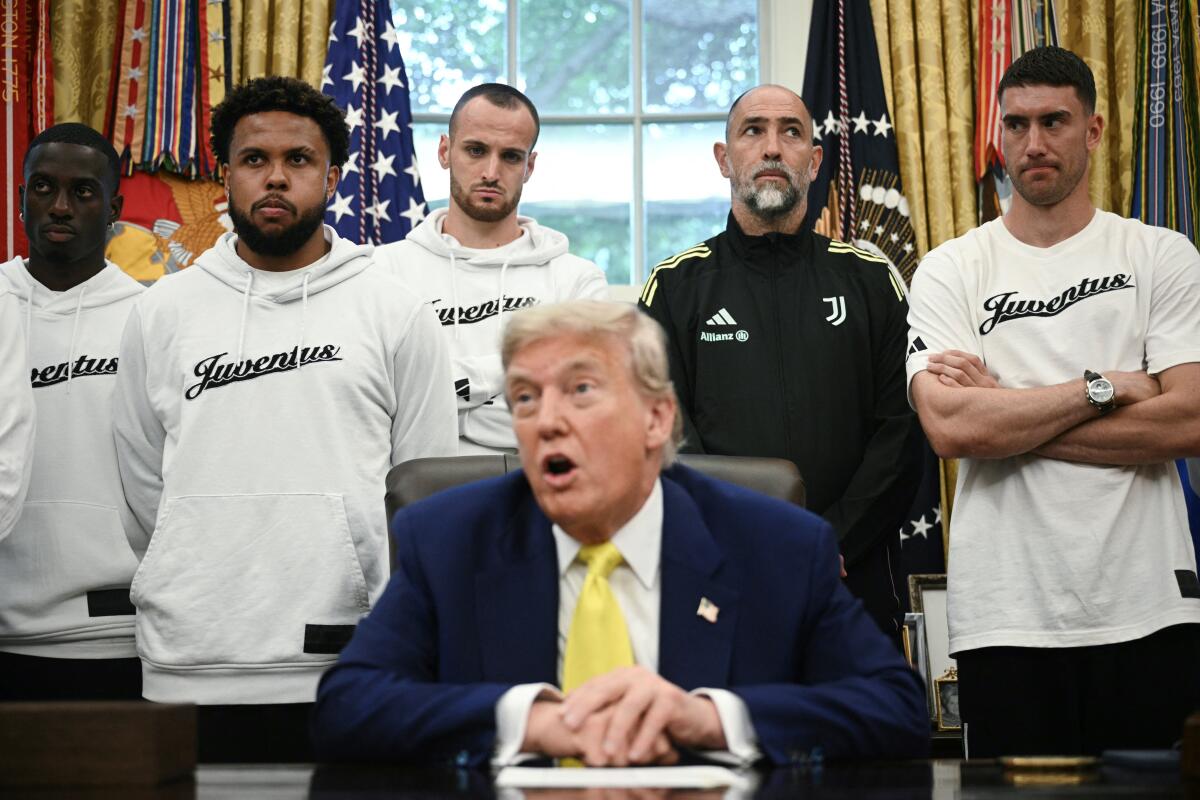
Political moments have also surfaced around other football events. During last summer’s Club World Cup, Juventus players visiting the Oval Office were questioned by Donald Trump about transgender participation in sport, while discussions also touched on military action involving Iran.
YOU MAY ALSO LIKE: Carlos Alcaraz Defeats Novak Djokovic To Win Australian Open And Complete Historic Career Grand Slam
Trump was also present at the World Cup draw in December, where he received a peace prize created for him by FIFA president Gianni Infantino.
Molango added: “Football needs to be out of politics, football needs to cater for everyone and should never be perceived as being siding with one side or the other, irrespective of what we may think morally.
“And I feel very strongly about that. The money of football should never be used for any political goals. So I think that’s absolutely wrong.”

Why you can trust SurgeZirc UK. Learn more about our editorial standards.