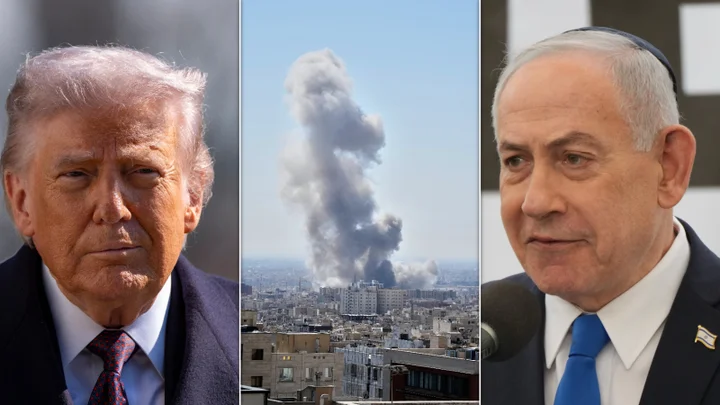
Global tensions have surged after Donald Trump authorised joint US and Israeli strikes on Iran over the weekend, dramatically escalating the conflict in the Middle East.
The attacks killed Iran’s Supreme Leader Ayatollah Ali Khamenei, a seismic development for the Islamic Republic he had led for nearly four decades. Tehran swiftly retaliated with missile strikes targeting countries linked to US military operations across the region, pushing the Middle East into renewed instability.
With more nations being drawn into the crisis, here is what we know so far.
The White House has been attempting to pressure Iran into accepting a new agreement that would block the country from obtaining nuclear weapons.
The US and Israel have pointed to Iran’s extensive uranium enrichment programme, which they say is nearing weapons-grade capability. Tehran has consistently denied the accusations, insisting its nuclear work is for peaceful civilian use.
Iran previously terminated its nuclear agreement in June 2025 following a 12-day conflict with the US and Israel that struck Iranian nuclear and military facilities.
During negotiations last week, Tehran’s leadership agreed to halt uranium stockpiling and permit full verification by the International Atomic Energy Agency, but talks collapsed without a deal, with Trump saying he was “not thrilled”.
The US has also been building its largest regional military presence since the 2003 invasion of Iraq.
Public protests inside Iran against the regime have grown in recent months and have been forcefully suppressed. Trump and Israeli officials have encouraged demonstrators to rise up, telling Iranians: “this will be, probably, your only chance for generations”.
US And Israel Launch “Pre-Emptive” Strikes On Iran
On Saturday, Israel carried out what it described as “pre-emptive” strikes on Iran, while Trump accused Tehran of waging an “unending campaign of bloodshed and mass murder” against the United States.
He claimed Iran had rejected every opportunity to renounce its nuclear ambitions and alleged it was developing long-range missiles capable of threatening Europe, US forces overseas and even “soon reach the American homeland”.
Washington said its campaign — dubbed “Operation Epic Fury” — would target Iran’s missile capabilities, naval assets and Tehran-backed armed groups across the Middle East. Israel named its parallel offensive “Lion’s Roar”.
Israeli President Isaac Herzog told BBC Radio 4’s Today programme the country has a “huge amount of proof” to justify the assault.
“We are in a historic juncture where the future of the Middle East depends on the success of this operation,” Herzog said, describing Iran as an “empire of evil” that wants to “wipe us off the map”.
He added: “We have huge amount of proof which we are sharing of course with our British allies and every other allies. We want to make sure that there is a real change in the region.”
Rising Death Toll And Regional Retaliation
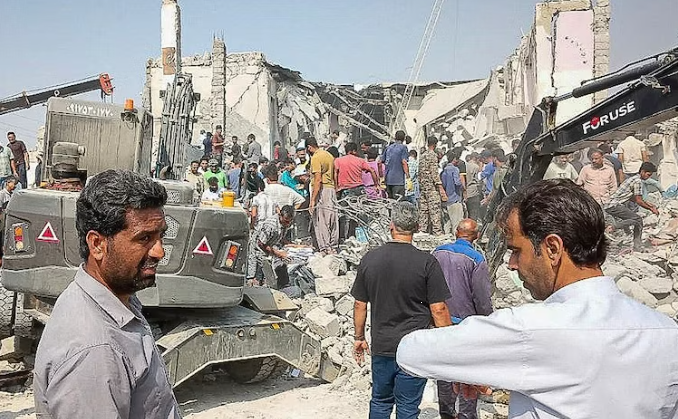
Iranian state media reported that the strikes killed 148 people at a girls’ school in southern Iran. Iran’s counter-attack also struck the Israeli city of Beit Shemesh, killing at least nine — the deadliest hit on Israel since the conflict began.
United States Central Command said three US service members were killed in action during the operation. Trump warned more casualties were likely, saying in a video posted overnight: “That’s the way it is.”
The Iranian Red Crescent Society reported 555 deaths across more than 130 Iranian cities.
Iran’s regional allies have also mobilised. The Lebanese Shia militia Hezbollah, despite heavy losses in its long conflict with Israel, launched missiles and drones towards Israel on Saturday.
Israel ordered evacuations in 50 towns and villages before striking Beirut and southern Lebanon, where at least 31 people were killed.
Lebanese Prime Minister Nawaf Salam urged restraint, calling the rocket fire an “irresponsible and suspicious act” that “provides Israel with pretexts to continue its attacks”.
The Israel Defense Forces warned Hezbollah would “pay a heavy price” and signalled the offensive could intensify over several days. Explosions have also been reported in Erbil, Doha, Bahrain and Jordan, highlighting the widening risk of regional spillover.
What Role Is The UK Playing In The Crisis?
Britain has sought to avoid direct involvement, mindful of the legacy of the Iraq war. However, Prime Minister Keir Starmer confirmed the UK allowed US forces to strike Iranian missile sites from British bases.
He described the move as defensive and stressed the UK would “not join offensive action now”. Hours later, a suspected drone strike hit RAF Akrotiri in Cyprus, according to the UK Ministry of Defence, though no casualties were reported.
British officials are now preparing what could be an unprecedented evacuation effort for UK nationals in the Gulf. Foreign Secretary Yvette Cooper said more than 300,000 UK citizens are in the region, with 102,000 having registered their presence.
Global Economic Fears Begin To Mount
Markets are already reacting nervously amid fears the conflict could disrupt the Strait of Hormuz, a vital artery for global energy shipments located between Iran and the United Arab Emirates.
Oil prices have climbed sharply, with Brent crude jumping 13% in early Monday trading. Airlines are also scrambling to reroute flights as multiple Middle Eastern countries close their airspace.
US cities from New York City to Los Angeles have gone on high alert over fears of potential Iranian retaliation on American soil.
Trump said military operations would continue in Iran “until all of our objectives are achieved”, arguing that “an Iranian regime armed with long range missiles and nuclear weapons would be a dire threat to every American”.
He also appealed directly to Iranian forces, saying: “I once again urge the Revolutionary Guard, the Iranian military police, to lay down your arms and receive full immunity or face certain death.”
Trump claimed the strikes have already killed 48 Iranian leaders and suggested Tehran’s new leadership wants talks — though Iran’s security chief Ali Larijani responded: “we will not negotiate with the United States”.
Domestic Pressure Builds On Trump
Back home, the US president may face growing political pressure.
SEE TODAY'S TOP HEADLINES ACROSS LEADING PUBLICATIONS
Trump was elected on a promise to avoid dragging Americans into new overseas wars under his “America First” platform. A Reuters/Ipsos poll found just 27% of Americans approve of the strikes, while roughly a quarter of Republicans believe he is too willing to use military force.

Why you can trust SurgeZirc UK. Learn more about our editorial standards.