The term “agentic AI” has rapidly become the technology industry’s latest obsession. Mentioned repeatedly at recent events including Google I/O, Microsoft Build and NVIDIA’s Computex showcase, the concept centres on AI systems capable of carrying out tasks independently, with minimal human involvement.
From scheduling meetings based on email activity to automating routine digital tasks, the promise of AI agents handling day-to-day responsibilities has generated significant excitement across the sector.
Yet enthusiasm for handing over control to today’s AI models may be premature. Despite impressive advances, existing systems still suffer from hallucinations and reliability concerns, raising legitimate doubts about allowing them to operate autonomously.
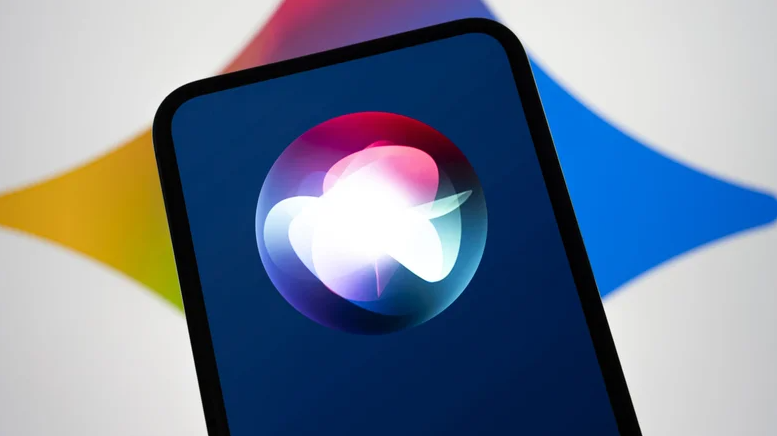
Against this backdrop, Apple appears to be charting a different course. During its WWDC 2026 keynote, the company devoted relatively little attention to agentic AI, instead highlighting practical ways its upgraded Siri assistant could enhance users’ daily experiences.
Apple Prioritises Practical Siri Features Over Full AI Autonomy
Rather than promoting a future dominated by independent AI agents, Apple showcased Siri capabilities designed to work alongside users. Demonstrations included Siri locating a friend’s updated address hidden within lengthy message threads and helping users navigate the process of securing tickets for exclusive events.
In essence, Siri AI continues to respond to user instructions while leveraging advanced AI models to process and synthesise information more effectively.
Initial impressions from WWDC 2026 suggest Siri AI performs as intended. However, comprehensive testing will be required to assess its reliability over time. With the software currently available in developer beta, significant refinements could still arrive before Apple’s operating system updates launch later this year.
YOU MAY ALSO LIKE: Keir Starmer Accused Of ‘Gambling With Young Lives’ Over Planned Social Media Ban For Under-16s
For those who remain sceptical about artificial intelligence, Apple’s implementation may prove surprisingly compelling. Compared with offerings such as Microsoft’s Copilot, Siri AI appears to focus more directly on solving practical user problems.
Apple’s emphasis on privacy may also distinguish it from competitors including Google and Microsoft. Through its Private Cloud Compute infrastructure, Apple states that only relevant data is processed, information remains anonymous, and server logs are not retained. The company says similar protections have been extended to its new AFM3 Cloud Pro model, which operates on Google’s servers using NVIDIA-powered hardware.
“While we absolutely minimize what is sent up to PCC, the critical thing about PCC is, architecturally, that’s at that point an efficiency measure,” Craig Federighi, Apple’s SVP of software engineering, said during a WWDC panel (via Ars Technica). “Because PCC itself, by design from the ground up, is going to vaporize any record of that data the moment after it answers your question… This is not stored. It’s all in a form where it’s completely transient.”
Apple’s Password Management Features Highlight Agentic AI Risks
Although Apple exercised restraint regarding agentic AI, it has not avoided the technology altogether. One example is the company’s new capability allowing Apple Intelligence to automatically update compromised passwords.
Apple says the enhanced Passwords app can “securely navigates through websites to sign in and upgrade their accounts to strong passwords.”
The feature inevitably raises important considerations. Beyond changing passwords, questions remain about what actions Apple Intelligence could perform while logged into websites. There are also concerns regarding the strength and reliability of automatically generated credentials.
At the same time, many users continue to rely on weak or compromised passwords across less important online accounts. Automating security improvements could therefore provide meaningful benefits, even if it involves surrendering a degree of control. The trade-off between convenience, security and user agency remains a delicate balance.
Safari’s Notify Me Feature Demonstrates Apple’s Cautious AI Expansion
Apple is also introducing agentic elements through Safari’s new “Notify Me” functionality, which enables users to receive alerts when specific changes occur on websites.
The feature could prove useful for monitoring price fluctuations or following developments related to particular organisations. It offers a more efficient alternative to repeatedly refreshing browser tabs throughout the day.
Its future potential is clear. Similar technology could eventually help users secure high-demand products before stock runs out or automatically notify friends when travel deals become available.
SEE TODAY’S TOP HEADLINES ACROSS LEADING PUBLICATIONS
Critics may argue that Apple continues to lag behind rivals in the broader AI race. Microsoft and Google have aggressively integrated AI capabilities throughout their product ecosystems, a strategy that has appealed to investors, even if some users believe it has compromised product quality.
Meanwhile, Apple has encountered delays with its AI-powered Siri overhaul, initially announced two years ago. Early Apple Intelligence features, including notification summaries and Genmojis, delivered mixed results, with notification summaries occasionally generating embarrassing inaccuracies.
Apple’s History Suggests Refinement Matters More Than Being First
Historically, Apple has rarely pioneered entirely new technology categories. The company did not invent the MP3 player, smartphone or ultraportable laptop.
Instead, Apple’s strategy has often focused on refining existing concepts, addressing shortcomings in early products and delivering more polished consumer experiences. The iPod succeeded through its user-friendly design, substantial storage capacity and integration with iTunes. Similarly, the iPhone transformed the smartphone market by moving beyond physical keyboards and introducing a more intuitive app-based ecosystem.
With Siri AI, Apple benefits from observing competitors’ successes and missteps, including Microsoft’s experience with Copilot. This perspective may help the company identify AI applications consumers genuinely find valuable.
SEE TODAY'S TOP HEADLINES ACROSS LEADING PUBLICATIONS
As AI technology evolves, Apple will almost certainly introduce more agentic capabilities. The crucial question is whether it can continue deploying those features thoughtfully and responsibly. For users already concerned about Siri occasionally misunderstanding voice commands, the prospect of increasingly autonomous AI systems handling more sensitive tasks may still require reassurance.

Why you can trust SurgeZirc UK. Learn more about our editorial standards.