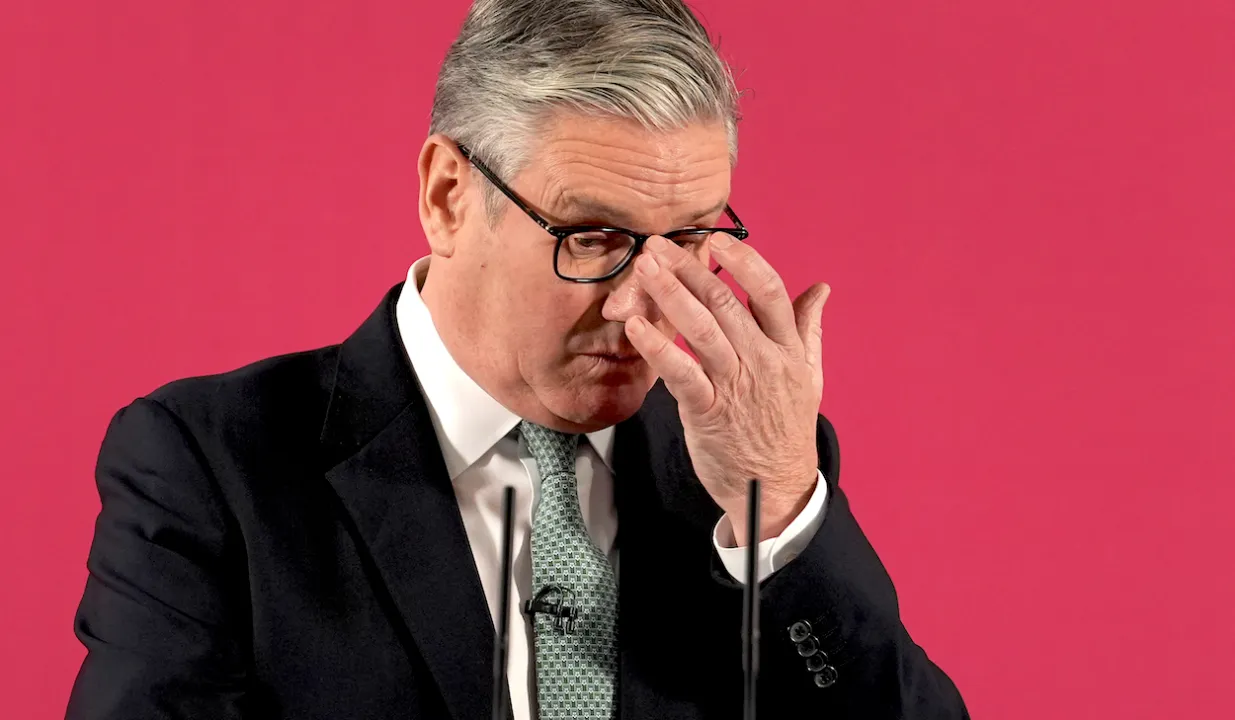
Donald Trump’s efforts to involve Britain in military action against Iran have placed Keir Starmer in a complex political and legal position.
Over the weekend, the United States and Israel carried out coordinated strikes on Iran, killing Supreme Leader Ayatollah Ali Khamenei. Tehran responded with attacks on US military installations across the region and fresh strikes against Israel, fuelling fears of a wider conflict.
Having initially declined Washington’s request, Starmer confirmed late on Sunday that the UK would permit US forces to use British bases to target weapons depots and missile launch sites.
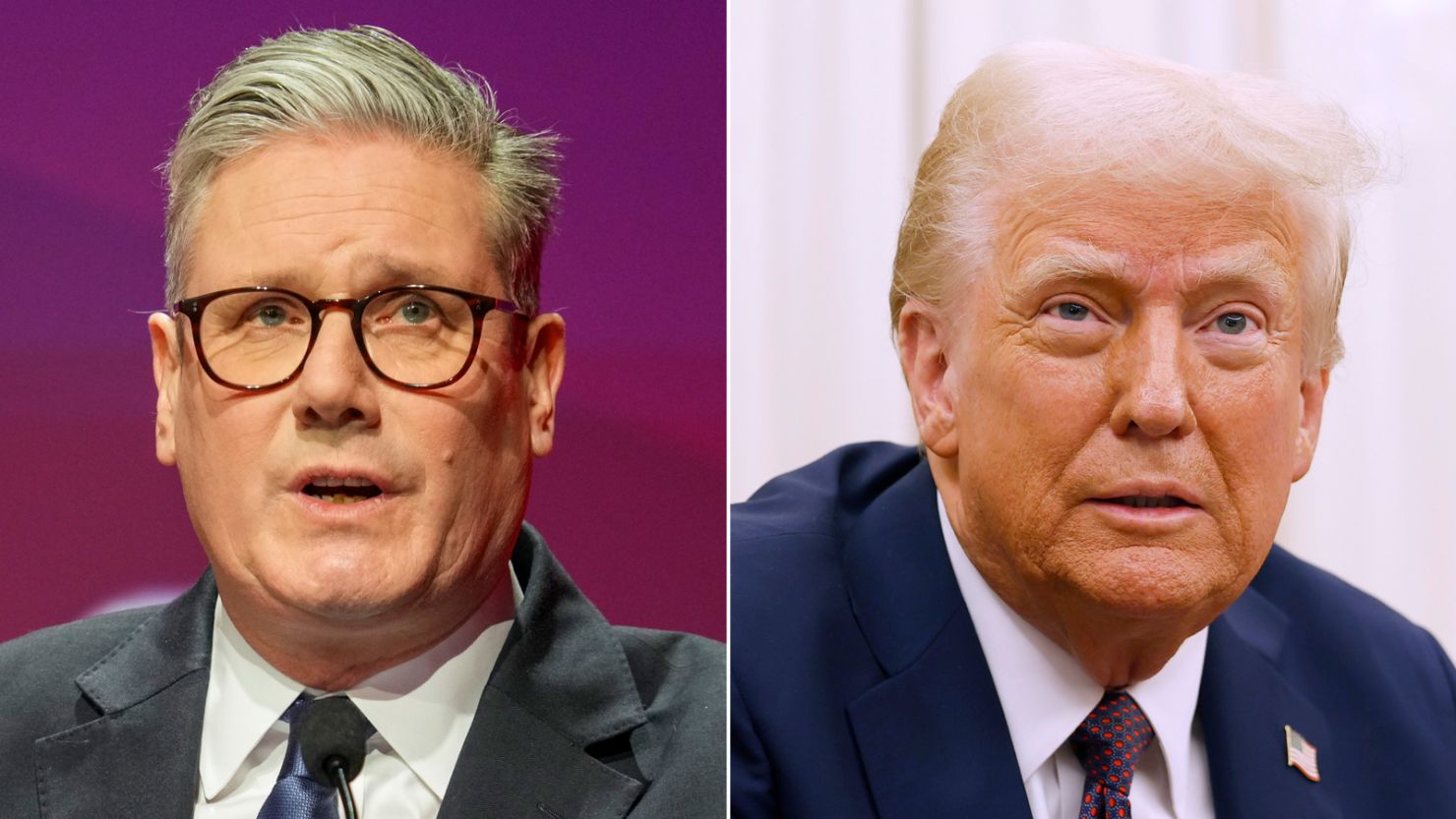
The prime minister said: “The basis of our decision is the collective self-defence of longstanding friends and allies, and protecting British lives. This is in line with international law.” But any goodwill from the White House appeared short-lived after Trump told the Telegraph he was “very disappointed” by what he viewed as Starmer’s delayed response.
Pressure on Downing Street intensified further after an Iranian drone targeted the RAF’s Akrotiri base in Cyprus.
Backlash Builds Over Starmer’s Handling Of US Request
Starmer now finds himself balancing diplomatic ties, domestic politics and military risk as the crisis deepens. His cautious approach has drawn sharp criticism from some prominent voices.
Broadcaster Andrew Neil told Times Radio the prime minister had managed the situation “very badly”, arguing he placed too much weight on legal advice rather than Britain’s strategic interests. “All America wanted from us was the use of the bases in Britain and Diego Garcia,” he said, adding it would have been “no skin off our nose”.
“The United States did not want us to go to war with them. They don’t need us,” Neil said. “The stupidity of that decision… allowing international lawyers of dubious providence to determine the national interest of the United Kingdom is a disaster for transatlantic relations.”
Former MI6 chief Sir Richard Dearlove struck a similar tone on LBC, saying: “We should have been clear cut from day one and supported the Americans and Israelis unequivocally.”
“We should have had the confidence and the moral conviction to know where our national security and defence interest best lay,” he said.
Public opinion, however, appears more cautious than some critics. Research by YouGov indicates that half of Britons oppose allowing the US to use RAF facilities to strike Iran. The same polling suggests 45% believe the government should neither endorse nor condemn the American action, while 21% want the UK to openly criticise Washington.
Speaking in the Commons on Monday, Starmer said his government “does not believe in regime change from the skies”, a remark widely interpreted as a veiled rebuke of Trump’s approach.
The Green Party of England and Wales — which has recently overtaken Labour in one opinion survey — has firmly opposed the US-Israeli operation. It has tabled an Armed Conflicts Requirements Bill intended to make it harder for Britain to become involved in overseas wars.
Legal And Economic Stakes Rising For The UK
Beyond the political row, the confrontation carries potential economic risks because of the global dependence on Middle Eastern energy supplies. Analysts warn that a 20% surge in oil and gas prices could drive up UK inflation and derail Labour’s growth agenda.
Legal questions are also coming into sharper focus. Dr Aurel Sari of the University of Exeter said the government’s case “rests on a crucial distinction between offensive and defensive military action”.
“Iran, responding to the US-Israeli assault, exercised its own right of self-defence, a right it was entitled to invoke under the UN Charter given the scale of the attack on it,” he said.
“However, Iran’s strikes have not been limited to military targets, but also hit civilian infrastructure, including international airports, hotels and residential areas across the Gulf.”
Since Saturday, Iran has launched missiles and drones at sites in Israel, Bahrain, Qatar, the United Arab Emirates, Kuwait and Iraq. Roughly 300,000 British nationals live across the Gulf.
Sari continued: “Because those attacks on civilian targets served no genuine defensive purpose, they exceeded what international law permits in self-defence.
YOU MAY ALSO LIKE: Donald Trump Launches Fresh Attack On Keir Starmer Over Iran Bombing Row
“The government argues that this, together with Iranian drone strikes against RAF Akrotiri, entitles the UK to use force against Iran in the exercise of the right of individual and collective self-defence.”
But he cautioned the legal footing is “highly precarious in practice”, noting that US operations “do not neatly separate offensive from defensive activities”.
He warned: “If British bases inadvertently support the broader US-Israeli campaign to destroy Iran’s military and change its government, the UK’s carefully constructed legal position collapses.
“While the government has drawn a clear legal line, it may lack the ability to hold it.”
Europe Split As UK Attempts Diplomatic Balancing Act
The unfolding crisis is also exposing divisions across Europe. Royal United Services Institute international security director Neil Melvin said the situation highlights both the limits of international law and Europe’s strategic discomfort.
“Many have said Iran has been allowed to hide behind international law for many decades, and engage in terrorism against the United States and its allies,” Melvin said.
“So therefore it’s a slightly strange position that the Europeans have adopted – that they often seem to be upholding more the rights of regimes which are repressing their populations and conducting terrorism.
“So now we’ve seen the Europeans having to shift.”
He pointed to a widening gap in European responses. Spain continues to label the strikes illegal and has asked US forces to vacate its bases, while Germany has offered firm political backing to Trump without fully endorsing the legal case.
The UK, by contrast, appears to be attempting a middle course.
Melvin said: “The UK has been struggling to occupy a middle ground, so the longer this conflict goes on, the more these difficulties and contradictions in the European position, I think, are going to be exposed.”
For Starmer, the challenge now is sustaining that delicate balance as the crisis shows no sign of easing.

Why you can trust SurgeZirc UK. Learn more about our editorial standards.