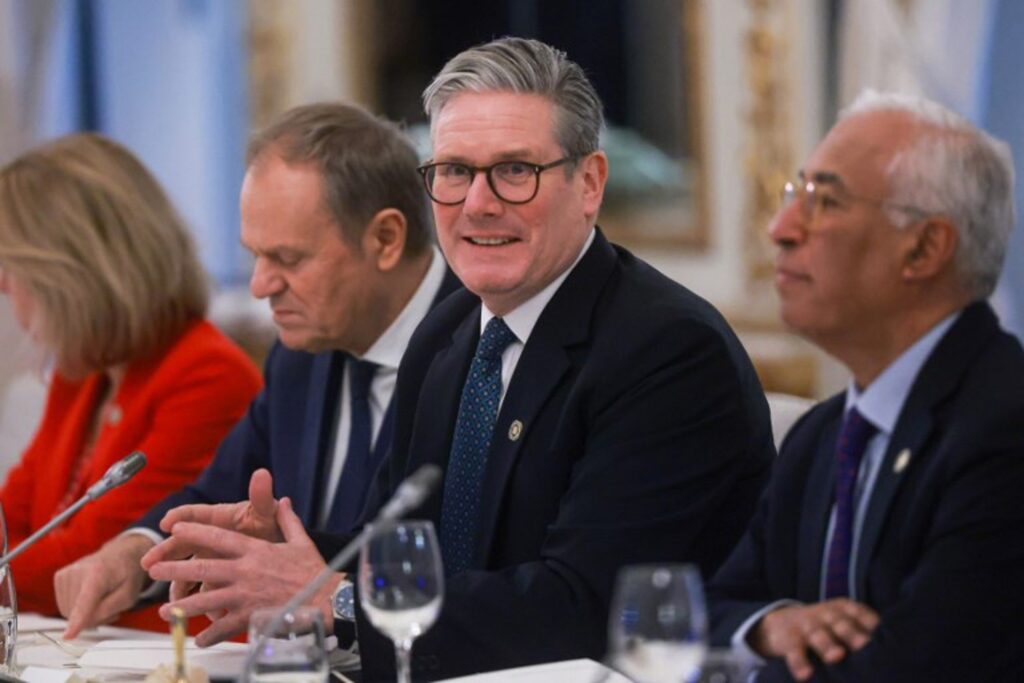
Sir Keir Starmer is set to accuse Reform UK and the Green Party of being “soft on Russia” and “weak on NATO” in a high-stakes speech at the Munich Security Conference on Saturday.
The prime minister will argue that Britain has moved beyond the “Britain of the Brexit years” as he calls for renewed European unity to counter Russian aggression at a time when the United States is shifting its strategic focus elsewhere.
His remarks, delivered to global leaders at one of the world’s most prominent security gatherings, are expected to underline the urgency of strengthening Europe’s collective defence posture — even as questions remain over the pace of the UK’s own military spending plans.
Although the rhetoric will be robust, Sir Keir is not expected to bring forward the government’s commitment to raise core defence spending from just over 2.3% to 3.5% of GDP by 2035.
Military officers privately acknowledge that the near decade-long timetable — agreed across NATO allies — is too slow given the scale of the threat posed by Russia and the need for European nations to shoulder more responsibility as Donald Trump redirects US military assets to other global priorities.
Sir Keir Starmer Targets Reform UK and Greens Over NATO and Russia Stance
In unusually direct language, the prime minister will argue that voters must understand why rebuilding Britain’s defences is essential.
“Because, if we don’t, the peddlers of easy answers on the extreme left and the extreme right are ready. They will offer their solutions instead,” he will say, according to advance excerpts.
“It’s striking that the different ends of the spectrum share so much. Soft on Russia and weak on NATO – if not outright opposed.
“And determined to sacrifice the longstanding relationships that we want and need to build, on the altar of their ideology.
YOU MAY ALSO LIKE: BBC Question Time: Labour Minister Brands Reform ‘Retirement Home For Failed Tories’ In Nadine Dorries Clash
“The future they offer is one of division and then capitulation. The lamps would go out across Europe once again. But we will not let that happen.”
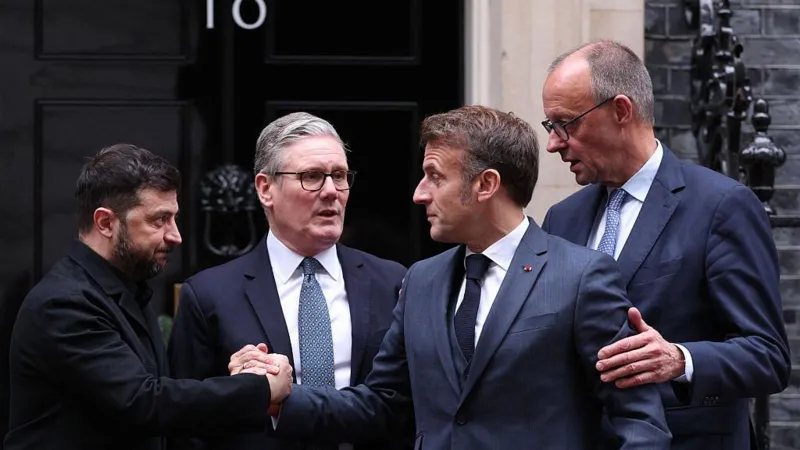
Reform UK swiftly responded. A spokesperson said: “This is a speech from a weak prime minister on the verge of being hounded out of office by his own party. This is a man that refuses to find the money to increase defence spending and is making our country weaker and less secure.
“Reform UK believes our priority should be rebuilding our armed forces, properly funding defence to at least 3.5% of GDP, standing up to China and Russia and strengthening our bilateral relationships.”
Renewed UK-EU Defence Cooperation After Brexit Years
The government is seeking closer cooperation with European Union allies on joint procurement of military equipment, including missiles, fighter jets and drones — a marked shift after relations were strained following the Brexit vote nearly a decade ago.
“We are not the Britain of the Brexit years anymore,” Sir Keir is expected to say.
“Because we know that, in dangerous times, we would not take control by turning inward – we would surrender it. And I won’t let that happen.
“There is no British security without Europe, and no European security without Britain. That is the lesson of history – and it is today’s reality too.”
The comments drew swift criticism from the Conservatives. Dame Priti Patel, the shadow foreign secretary, said: “Keir Starmer has a habit of handing away sovereignty and now he is once again rolling the pitch for greater EU integration and less control for the UK.
“Britain is uniquely placed to help bring the US and Europe together, ensuring NATO is as strong as possible. We must not be overdependent on America, but neither should we offer Europe a blank cheque, prepared to accept any and all costs as Labour are.”
Munich Security Conference 2026: Global Leaders Gather as Ukraine War Nears Fifth Year
The three-day Munich Security Conference — now the largest annual public forum on European security — brings together senior figures from across the globe.
Among those attending are US Secretary of State Marco Rubio, European leaders from Germany and France, China’s foreign minister and Ukrainian President Volodymyr Zelenskyy.
Efforts led by Washington to broker a peace deal between Kyiv and Moscow continue as Russia’s full-scale invasion approaches its fifth year.
Mindful of the need to maintain strong transatlantic ties, Sir Keir is expected to stress that the United States remains indispensable, while also arguing that Europe must develop greater military autonomy.
“I’m talking about a vision of European security and greater European autonomy that does not herald US withdrawal but answers the call for more burden sharing in full, and remakes the ties that have served us so well,” he will say.

Why you can trust SurgeZirc UK. Learn more about our editorial standards.