China has executed four Canadian citizens in recent months, a move that has sparked outrage and deepened tensions between Ottawa and Beijing.
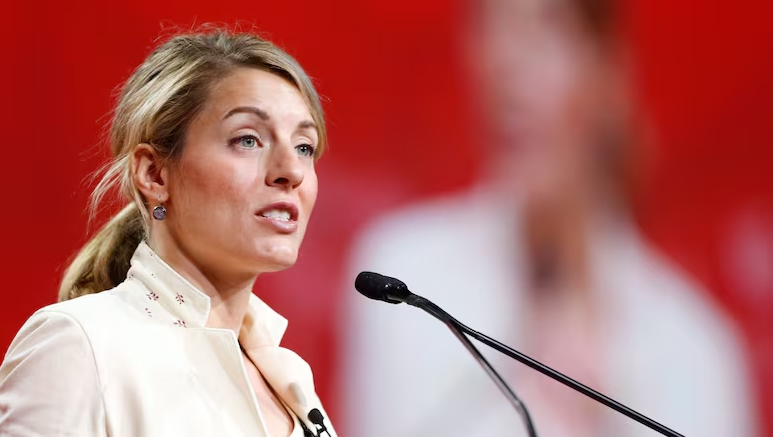
Canada’s Foreign Affairs Minister, Mélanie Joly, confirmed the executions and revealed that she and former Prime Minister Justin Trudeau had personally appealed for clemency. However, their pleas were ignored.
Beijing’s embassy in Ottawa justified the executions, stating they were related to drug crimes and emphasizing that China does not recognize dual citizenship. “We strongly condemn the executions,” Joly stated. “I asked personally for leniency … They were all dual citizens.”
Beijing Defends Its Actions, Canada Seeks Clemency
China maintains some of the strictest drug laws in the world, with severe penalties for offenders. A spokesperson for the Chinese embassy reiterated this stance: “China always imposes severe penalties on drug-related crimes.
The facts of the crimes committed by the Canadian nationals involved in the cases are clear, and the evidence is solid and sufficient.”
China is believed to execute more prisoners annually than any other country, though official figures remain a state secret.
While executions were traditionally carried out by gunshot, lethal injection has become more common in recent years. Beijing insists that the legal rights of the Canadians were “fully guaranteed” and warned Ottawa against making “irresponsible remarks.”
Despite this, Canada continues to push for clemency in other cases, including that of Robert Schellenberg, a Canadian sentenced to death for drug smuggling.
Global Outrage and Rising Trade Tensions
The international community has reacted with alarm, with Amnesty International condemning the executions. “These shocking and inhumane executions of Canadian citizens by Chinese authorities should be a wake-up call for Canada,” said Ketty Nivyabandi, the organization’s head for English-speaking Canada.
The timing of these executions coincides with escalating trade disputes between the two nations. Earlier this month, China imposed tariffs on Canadian farms and food imports, retaliating against Canada’s duties for Chinese-made electric vehicles, steel, and aluminium products.
Political figures in Canada have also voiced their concerns. Ian Brodie, former chief of staff to ex-Prime Minister Stephen Harper, remarked that “agricultural tariffs weren’t the worst part of the PRC response to EV tariffs.”
YOU MAY ALSO LIKE: Israel Resumes Airstrikes On Gaza After Ceasefire Breakdown, Killing Hundreds
Meanwhile, Conservative MP Michael Chong called the executions “unprecedented” and a clear indication that Beijing is not interested in mending relations with Canada.
With diplomatic relations at a breaking point, Canada’s government remains firm in its stance, vowing to continue advocating for its citizens facing the death penalty abroad.
Kindly follow @surgezircuk on Instagram. On X (Twitter), follow @surgezircuk.

Why you can trust SurgeZirc UK. Learn more about our editorial standards.