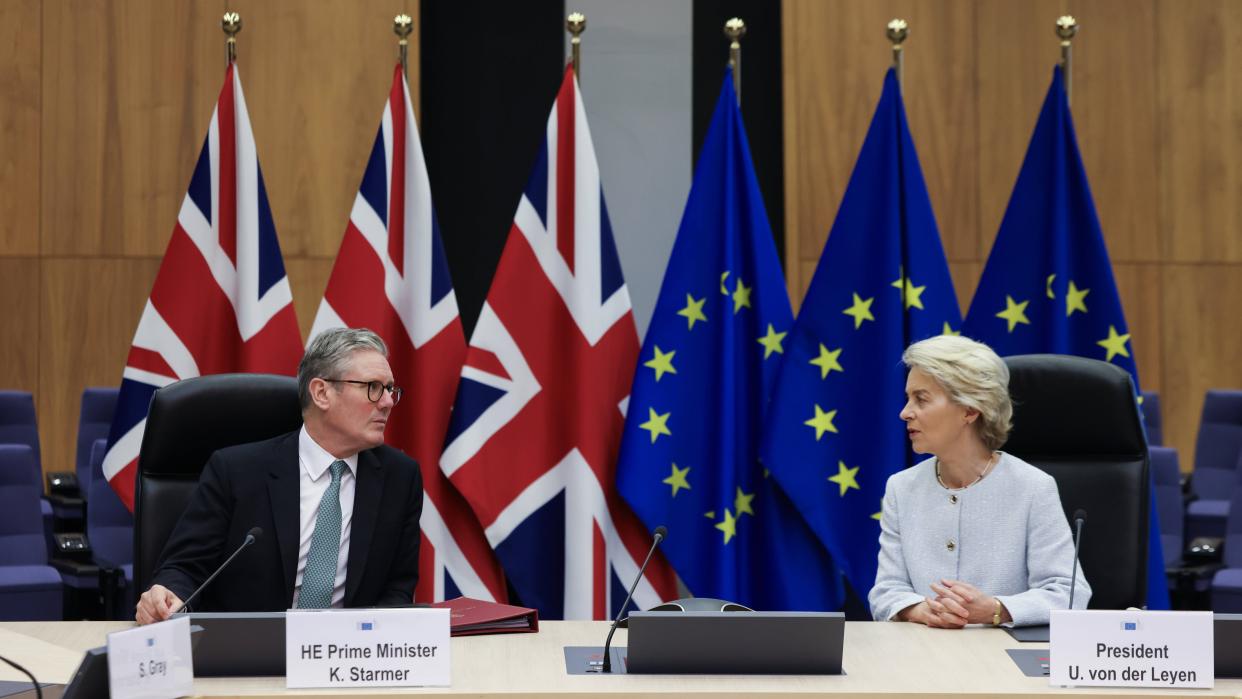
It is no secret that Keir Starmer has long held favourable views towards the European Union. Few MPs played a more prominent role in efforts to reverse the outcome of the 2016 Brexit referendum than the Holborn and St Pancras MP, particularly during his time as Labour’s shadow Brexit secretary.
Starmer consistently pushed for a second public vote, often facing resistance within his own party, and made clear he would campaign to remain in the EU if given the opportunity. However, Jeremy Corbyn’s backing of Boris Johnson’s call for a snap general election in 2019 ultimately halted that prospect.
Johnson went on to secure a decisive victory, leading the UK out of the EU on January 31, 2020 — a moment that coincided with Labour’s leadership race, which Starmer won on a platform that included a pledge to “defend free movement as we leave the EU”.
That commitment, along with several others from his campaign, was later abandoned. The government has since maintained firm “red lines”, ruling out rejoining the single market, customs union, or restoring free movement.
Keir Starmer Criticises Brexit Impact As Government Eyes EU Cooperation
These positions were widely viewed as politically necessary in the run-up to the 2024 general election, aimed at retaining support among voters who backed Brexit and later switched to the Conservatives.
Now, however, senior figures in government appear more willing to speak openly about Brexit’s consequences and the need for closer European cooperation.
On Wednesday, Starmer said Brexit “did deep damage to our economy”, adding that the economic fallout linked to the Iran conflict meant “the opportunities to strengthen our security and cut the cost of living…. are simply too big to ignore”.
He also pointed to shifting global dynamics, including strained relations with the United States under Donald Trump, as a factor shaping the UK’s strategic direction.
“It is increasingly clear that as the world continues down this volatile path, our long-term national interest requires closer partnership with our allies in Europe and with the European Union,” he said.
His remarks reflect a broader government approach, with Chancellor Rachel Reeves recently outlining plans to “breaking down trade barriers and deepening alliances with our European partners” during her Spring Statement.
UK-EU Negotiations Advance As Political Risks Emerge Ahead Of Elections
Talks between the UK and EU are already under way, covering areas such as youth mobility, food and drink trade, and the emissions trading scheme. Officials are aiming to reach agreements ahead of a planned summer summit.
A government source said: “The lightbulb moment happened for Europe with Trump’s Greenland stuff. He wound up the Danes and all of us with that stuff. Iran has made it all the more prescient.
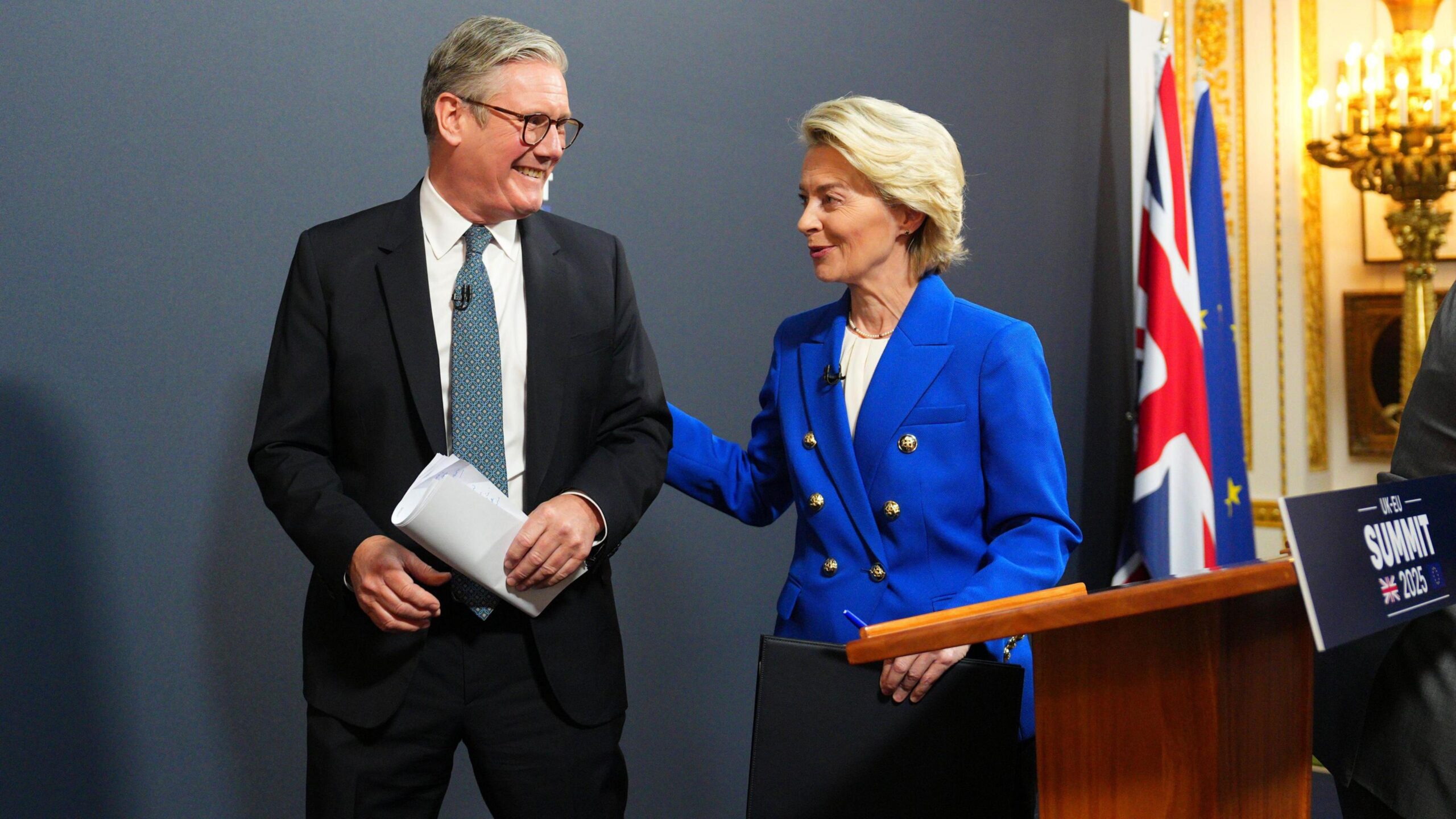
“It gives us an opportunity to step up a programme that will help resilience across the EU, but which will also be in the UK national interest and benefit Britain.”
Despite this momentum, some within Labour have expressed concern about the timing, with local elections approaching. One senior party figure said: “I can see this appearing on every Reform leaflet in the country.
“Why do it about a week or two before the postal votes go out? Election day is not on May 7, it’s in a couple of weeks time when the postal votes go out, and all the Reform Facebook groups will be featuring this strongly.”
YOU MAY ALSO LIKE: Labour Faces Crushing Losses In May Elections As Polling Expert Warns Of ‘Total Bloodbath’
However, government insiders insist voters are unlikely to punish Labour for seeking improved EU relations. “What we’ve tried to do since the general election is take voters on a bit of a journey and show that we are making deals that help our economy while still being true to spirit of Brexit.
“We’re sticking to our red lines on the single market and customs union, and getting a bespoke relationship with the EU while making use of our Brexit freedoms as well.
“People are not happy with the deal Johnson agreed, and can can make that link between issues at the border and prices on the shelves.
“People want to see the UK to go out and make deals with the EU while sticking to our red lines. Voters have moved on from 2016, they don’t want to relitigate the Brexit debate all over again.”
Reform UK Attacks Starmer While Labour Defends Economic Strategy
Opposition figures have seized on the issue, with Reform UK accusing the prime minister of undermining the referendum result.
Deputy leader Richard Tice described it as “ludicrous” to suggest Britain should move closer to “a failing economic bloc that also has a long track record of failing to invest in defence”.
Meanwhile, Cabinet Office minister Nick Thomas-Symonds defended the government’s position, saying: “Reform is betraying the future of young Brits.
“Between Robert Jenrick axing EU travel for young people and Farage shredding trade deals, they’d rather pick a fight with Europe than protect people’s household finances. They’re obsessed with a harder Brexit that hits every household with a massive paperwork tax.”
Some Labour MPs have also backed the government’s approach, arguing that public priorities have shifted.
“Brexit was ten years ago. The government’s been firm in its EU red lines and is doing nothing which would undermine them,” one MP said.
“It’s the cost of living, precipitated by Trump’s war on Iran, which is fore of people’s minds. Set against the backdrop of increasing global uncertainty, striking a closer relationship with the EU is all the more important if it can bring down the cost of the weekly shop and reduce barriers for British businesses.”

Why you can trust SurgeZirc UK. Learn more about our editorial standards.